Most of us grow up carrying a vision of the future. It shifts over time, but it tends to return to the same question: “What will I become?”
For many individuals with intellectual and developmental disabilities, that question is too often answered before it is fully asked. Possibility narrows and expectations settle. Doors close softly, then all at once.
At Easterseals Midwest, that narrative is being reimagined. And, somewhat unexpectedly, it begins inside a virtual world.
Exploring Careers Through Virtual Reality
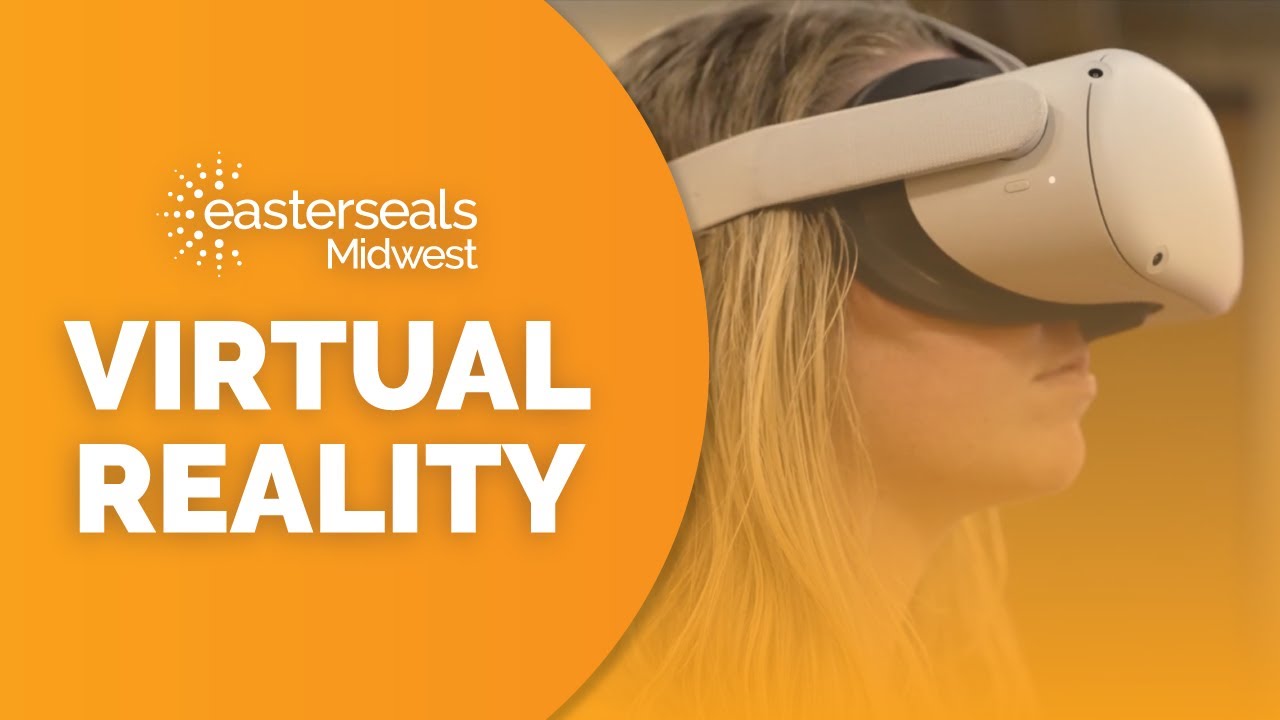
In a modest training space, a participant lifts a headset and settles it into place. The room dissipates, and in its wake is a workshop bright with overhead lights and tools aligned with intent and precision.
They reach forward. Pause. Try again. Step by step, the task takes shape.
“We have a program that uses virtual reality to support career exploration and help people develop skills they can use in the workplace,” said Tec Chapman, Chief Program Officer at Easterseals Midwest. “Enhancing access to employment often requires innovation. Sometimes, we have to create entirely new ways for people to encounter opportunities that weren’t previously accessible.”
Through virtual reality, participants can enter environments that might otherwise remain out of reach, like manufacturing floors or technical workspaces. Roles defined not by limitation, but by possibility. They don’t just observe: they engage.
Practice Before the First Day
For many, access is the barrier. Safety protocols, liability concerns, limited entry points - each one a necessary safeguard, yet together, a wall. Virtual reality softens that edge. It does not remove the wall entirely, but it offers a door.
“The program allows people to explore careers and practice job-related tasks in industries that may otherwise be difficult for them to access,” said Lindsey Watson. “With the headset, participants can step inside those environments, understand how they function, and begin practicing the steps involved.”
Inside the simulation, work becomes tactile and rhythmic. Observe, attempt, adjust… then repeat. And repetition matters. Studies suggest that rehearsed experiences in virtual settings can carry forward, translating into stronger social awareness, sharper job skills, and greater confidence in real-world environments.
Expanding Possibility
The true impact, however, is not only skill-based. It is perceptual.
“These students are often placed in a box by society,” Watson said. “But when they use the headset, they begin to see something different - more opportunities, more pathways. They try the work themselves and walk away thinking, ‘I think I could do that.’”
That small, almost fleeting moment is where something shifts.
Across the United States, nearly 78 percent of people with disabilities remain unemployed. The gap is stark, but it is not a reflection of ability. More often, it reflects who is invited in and who is given the chance to try, to fail, and to try again. At its best, this work is not about technology. Not really.
It is about opening space to explore, to build, to imagine a future that feels both possible and personal. Because in the end, the headset does more than simulate a workplace. It widens the frame.
And within that widened frame, a different future begins to take shape; one defined not by limitation, but by independence, purpose, and the confidence of I can.