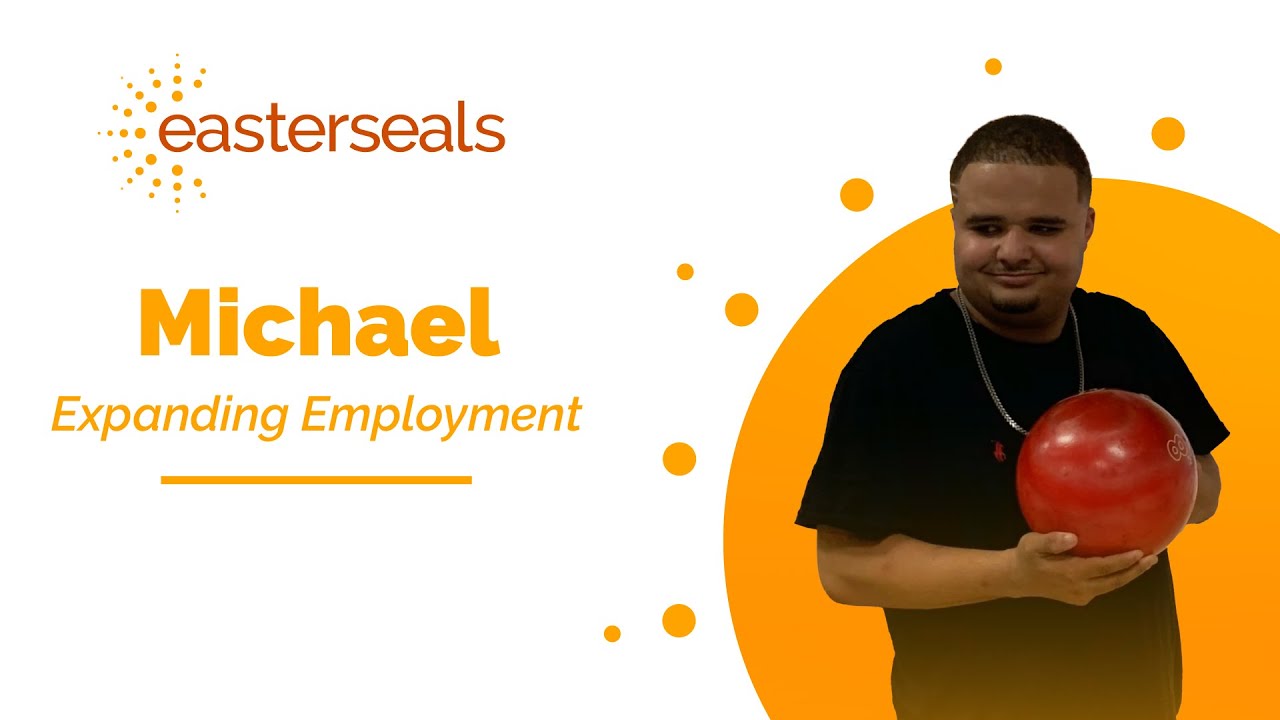
The most meaningful stories aren’t always under the spotlight. They’re in living rooms, kitchen tables, and the space between who someone was and who they are becoming.
Stacy Brown knows that too well.
“I’m Mike’s mom,” she says, smiling. “Mike is a very loving and caring kid. He aims to please.”
She says his name the way mothers do. Michael. Mike. Like it carries both memory and forward movement. A young man tuned to the people around him, who is quick to notice and help. Always ready. For most of his school years, he received services that helped him learn and grow. There were meetings, plans, and progress notes, but when childhood ends, the script changes.
School bells stop ringing. Adulthood begins asking different questions.
- What comes next?
- Where will he work?
- How will he live?
For many families, that transition feels like stepping off a curb you didn’t see. The support that once felt steady can thin out and the quiet drumbeat of consistency becomes the missing rung on the ladder. Michael is standing at that hinge between who he was and who he’s becoming. Stacy feels it.
“Michael’s transitioning from the teenage version of Michael to the adult version of Michael,” she explains. “Having Easterseals to help me with some of these services and teaching him life skills… it’s different coming from a parent’s perspective other than getting the actual services and being able to break them down.”
There is relief in her voice. A steadiness.
Across Missouri, more than 340,000 people live with an intellectual or developmental disability, and yet people with disabilities are twice as likely to be unemployed as people without disabilities. The numbers are stark. Behind every statistic is a young adult trying to find his or her place. That’s where the story turns. At Easterseals Midwest, employment services begin with a conversation. That’s where Abigail Whitney, the Program Director over Employment and Community Services in Kansas City, comes in.
“Our employment services are very individualized and customized,” she says. “We meet each individual and talk through where they’ve been, like any experience, volunteerism, school that they’ve had. Then where they want to go.”
Where they want to go. A phrase that lingers. Not what’s available or the easiest or what fits into a neat box. Where do you want to go? The work starts right there.
For Michael, employment is about purpose. Waking up with somewhere to be and learning the backstage choreography of a workplace: the rhythm of tasks, the exchange of greetings, the pride of doing something well.
Abigail is clear about that.
“We all, as human beings, need to find a place of employment that is beneficial,” Abigail says. “That is meaningful. We want that same experience for the individuals we support. We want their first job experience to be a great job experience and not just a first job.”
Because firsts set a tone. They shape confidence and answer the question every young adult carries into a workplace: Do I belong here? At Easterseals Midwest, employment services begin with listening. Where have you been? Where do you want to go? The work grows from that conversation and is built for meaning and longevity.
Employment widens a person’s world, stretches their circle, and strengthens independence. In Missouri, people with disabilities earn, on average, 19 percent less than people without disabilities. Income gaps. Opportunity gaps. Quiet barriers that can begin to feel immovable. But meaningful work can change that trajectory.
“Employment empowers somebody to be more independent,” Abigail says. “It widens their social network and connection to the community and improves their self-worth so much.”
Back in her living room, Stacy exudes passion when she talks about consistency.
“The consistency is always my number one thing when I recommend Easterseals,” she says. “My goal for Michael ultimately is for him to be as independent as possible, as self-sufficient as possible, and be able to live in the community and take care of himself.”
Independence typically takes time. Skill by skill, shift by shift, and conversation by conversation. Michael is learning that right now by stepping into adulthood with guidance that does not disappear when things get hard. People see him as a young man with strengths, preferences, and plans.
Most lives are shaped in the shadows, from small victories, consistent routines, and new jobs that turn into futures. Michael’s story is just one family’s chapter. Yet it reflects thousands across Missouri who stand at that same threshold between school and adulthood, question and possibility.
When employment services are individualized and employment is treated as foundation rather than afterthought, futures begin to take root. Forget trophies or the spotlight. It’s about a clear path, a daily timecard, and a place to belong.
That is the most powerful story of all.